
What Is Conveyor Belt Vulcanising and When Is It the Right Repair?
A damaged conveyor belt does not automatically mean the entire belt needs replacing. Depending on where the damage is, how much wear is present and the condition of the rest of the belt, a professional vulcanised repair can often provide a practical way of getting a conveyor back into operation.
For factories, distribution centres, processing plants and other businesses where conveyors form part of everyday production, that distinction matters. Replacing a belt unnecessarily adds cost and can increase downtime. At the other end of the scale, repeatedly repairing a belt that is already heavily worn can simply delay an inevitable replacement.
Premier Belting Services Ltd provides conveyor belt vulcanising, manufacturing, supply and fitting for businesses across the UK, helping customers decide on the most practical solution for the condition of their equipment.
What Is Conveyor Belt Vulcanising?
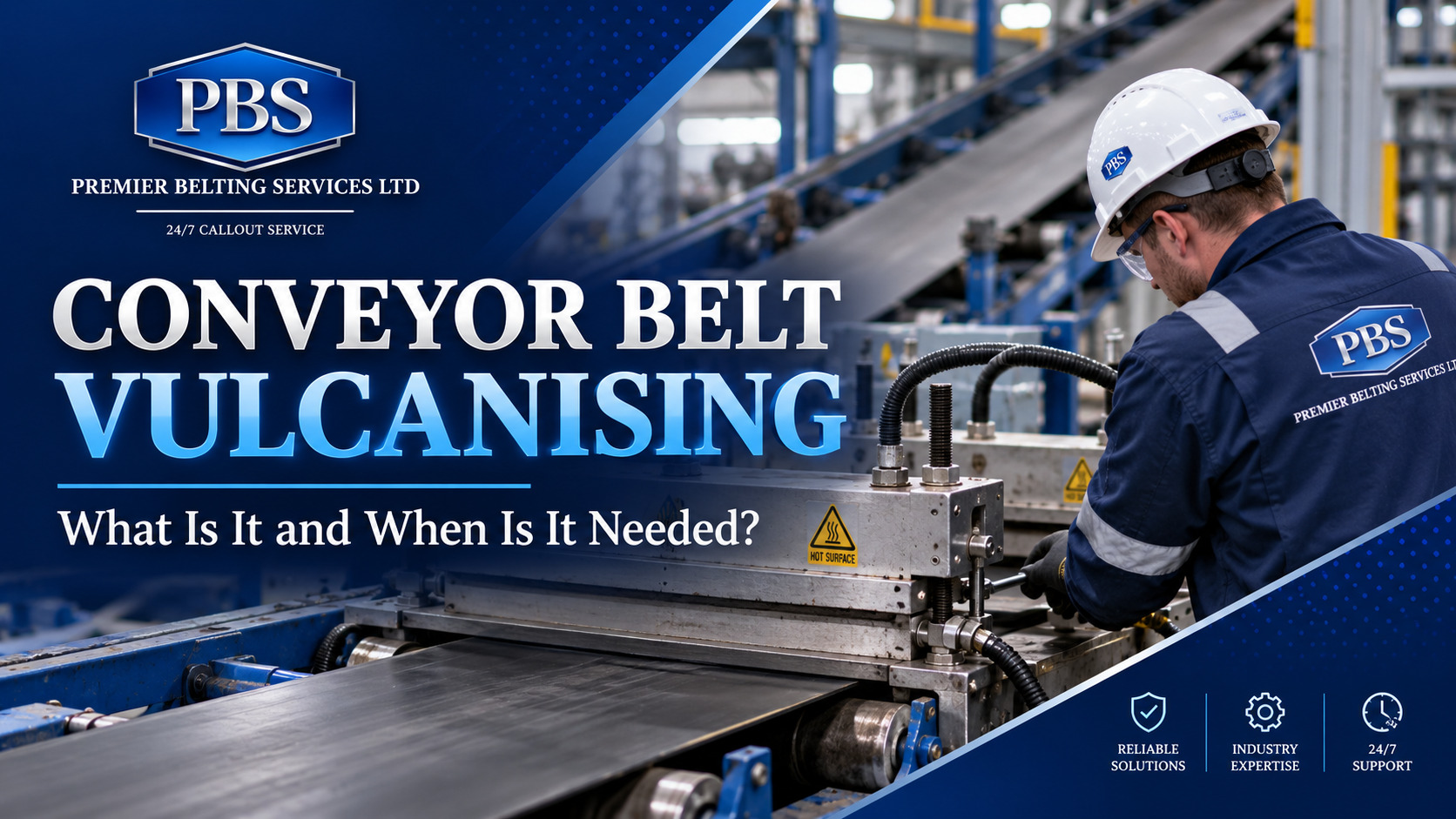
Conveyor belt vulcanising is a method of joining or repairing belt material to create a strong, permanent connection.
It can be used when installing a new endless belt, renewing a failed joint or repairing certain types of localised belt damage. The process varies according to the material and construction of the belt, so the correct method needs to be chosen for the specific application.
The aim is not simply to cover over a damaged section. A properly prepared repair should restore the integrity of the belt and allow it to continue operating under its normal load and working conditions.
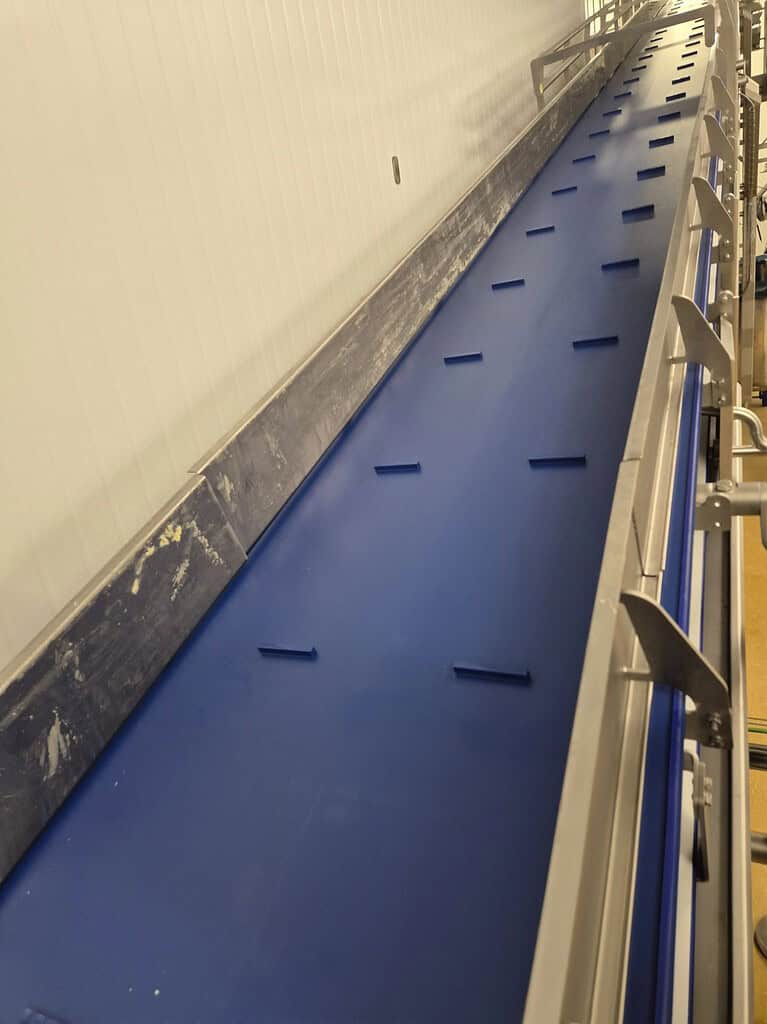
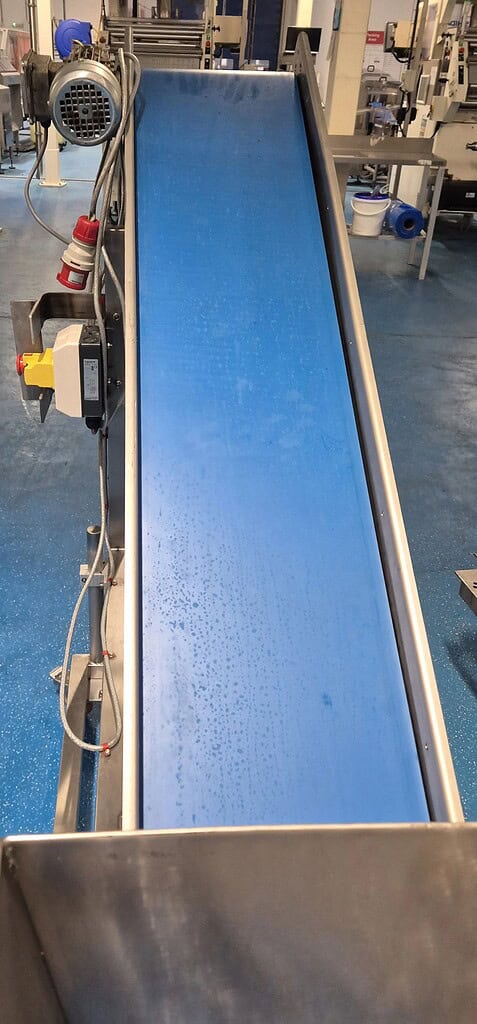
Premier works with a range of <a href=”https://premierbeltingservices.co.uk/” style=”color: inherit; text-decoration: none;”>PVC and polyurethane conveyor belting</a>, as well as power transmission belting and custom poly bands manufactured in-house.
Why Do Conveyor Belt Joints Fail?
Conveyor belts operate continuously around rollers and pulleys, often for long shifts and in demanding environments. Over time, stress at the joint or elsewhere on the belt can begin to show.
Some of the more obvious signs include:
- A joint beginning to separate
- Frayed or damaged belt edges
- Cracking around the splice
- Cuts or tears in the surface
- A belt repeatedly running off centre
- Unusual noise as the joint passes around a pulley
- Slipping under load
- Sections of belt beginning to lift or distort
The important part is identifying why the damage has occurred.
For example, repairing a damaged edge will only provide a temporary answer if the belt continues to rub against the conveyor frame. In the same way, replacing a failed joint without considering incorrect tension or tracking could lead to the same problem returning.
When Is Vulcanising a Sensible Repair?
A vulcanised repair can be worthwhile when the damage is concentrated in one area and the rest of the belt remains in good working condition.
A belt may still have considerable service life remaining when a joint begins to deteriorate. In that situation, repairing or renewing the affected area can make considerably more sense than replacing the complete belt.
The same applies to certain forms of local damage. If the belt material, surface and carcass remain serviceable, an experienced belt engineer can assess whether a repair is likely to provide a dependable result.
This is particularly valuable on production equipment where the cost of the belt itself is only part of the problem. Every hour that a conveyor is unavailable can affect staff, output, deliveries and other machinery further along the line.
When Is It Better to Replace the Belt?
Repair is not always the right answer.
If the whole belt is approaching the end of its working life, repairing one section may simply move the problem somewhere else.
Replacement should be considered where there is widespread wear, extensive edge damage, significant stretching or repeated failure in different areas. It can also make sense where several repairs have already been completed and maintenance is becoming increasingly frequent.
Another reason to consider replacement is poor belt specification.
If a conveyor has consistently suffered from wear, slipping or product-handling problems, it may be worth reviewing whether the existing belt is actually right for the job.
Premier provides made-to-order conveyor belt manufacturing and replacement, allowing factors such as belt material, dimensions, surface finish and operating conditions to be considered before a new belt is produced.
On-Site Vulcanising Can Reduce Disruption
Removing conveyor equipment or sending a belt elsewhere for repair is rarely convenient, particularly on larger systems.
On-site vulcanising allows work to be carried out where the conveyor is installed. This means the engineer can see the machinery, belt and surrounding components together, which can also help identify whether another part of the system has contributed to the failure.
Access, isolation and the available maintenance window should be discussed before attendance. A planned shutdown is generally easier to work around than waiting until a weakened belt fails completely.
The Health and Safety Executive’s guidance on machinery maintenance also highlights the importance of properly planning maintenance and ensuring equipment is safely isolated before work begins.
Different Industries Create Different Belt Problems
There is no universal conveyor belt repair because different industries place very different demands on their systems.
Within a distribution centre, belts may run for long periods while moving cartons, parcels or packaged products at relatively high speeds.
Food and processing businesses can have additional requirements around cleaning, hygiene, moisture and temperature.
Manufacturing sites may handle components with irregular shapes or sharp edges, while recycling and industrial facilities can expose belts to abrasive material, dirt and heavier loading.
Agricultural conveyors have their own challenges, particularly where belts are exposed to dust, organic material and changing environmental conditions.
Premier supports businesses across manufacturing, distribution, agriculture, processing and industrial sectors, so the condition and application of the belt can be considered before deciding how it should be repaired.
From Local Callouts to Wider UK Conveyor Belt Support
Premier Belting Services Ltd is based in Telford, where the business has built a strong local presence, but its conveyor belt services are not limited to the town.
The team already supports companies requiring conveyor belt services across Shropshire, including businesses in and around Shrewsbury.
Support also extends further into Staffordshire and the West Midlands, including conveyor belt repairs in Stoke-on-Trent and conveyor belt repairs in Dudley.
For customers further afield, Premier can also support industrial sites across the UK with conveyor belt supply, manufacturing, installation and on-site repair requirements.
Repair the Cause, Not Just the Damage
When a conveyor belt develops a fault, the visible damage only tells part of the story.
A separated joint may need vulcanising, but it is still worth checking why it failed. Edge wear might require repair, but the tracking needs investigating too. A worn belt may need replacing, but choosing the same specification again may not make sense if it has consistently performed poorly.
Taking a little time to understand the cause can prevent repeated breakdowns and unnecessary expenditure.
With more than 17 years of industry experience, Premier Belting Services Ltd provides belt assessment, on-site vulcanising, supply, fitting and custom conveyor belt manufacture for businesses that need their systems kept running reliably.
If you have a damaged conveyor belt, failing joint or recurring belt problem, contact Premier Belting Services Ltd to discuss whether repair, vulcanising or replacement is the most suitable next step.
The HSE external link is worth keeping in this one because it is genuinely relevant to on-site maintenance and gives the article a strong authoritative reference rather than adding an external link just for the sake of it. HSE advises that machinery maintenance should be planned, carried out by competent people and normally performed with equipment safely isolated.
Premier’s site also confirms the broader UK positioning, 24/7 callout service and its mix of vulcanising, manufacturing, fitting, PU/PVC belts and custom products.
Do you need help from our experts?
Give us a call today to get expert advice and support from our experienced team.